Dog Car Restraints for RVs: Tested & Compared
By Luis Andrade • 15th Feb
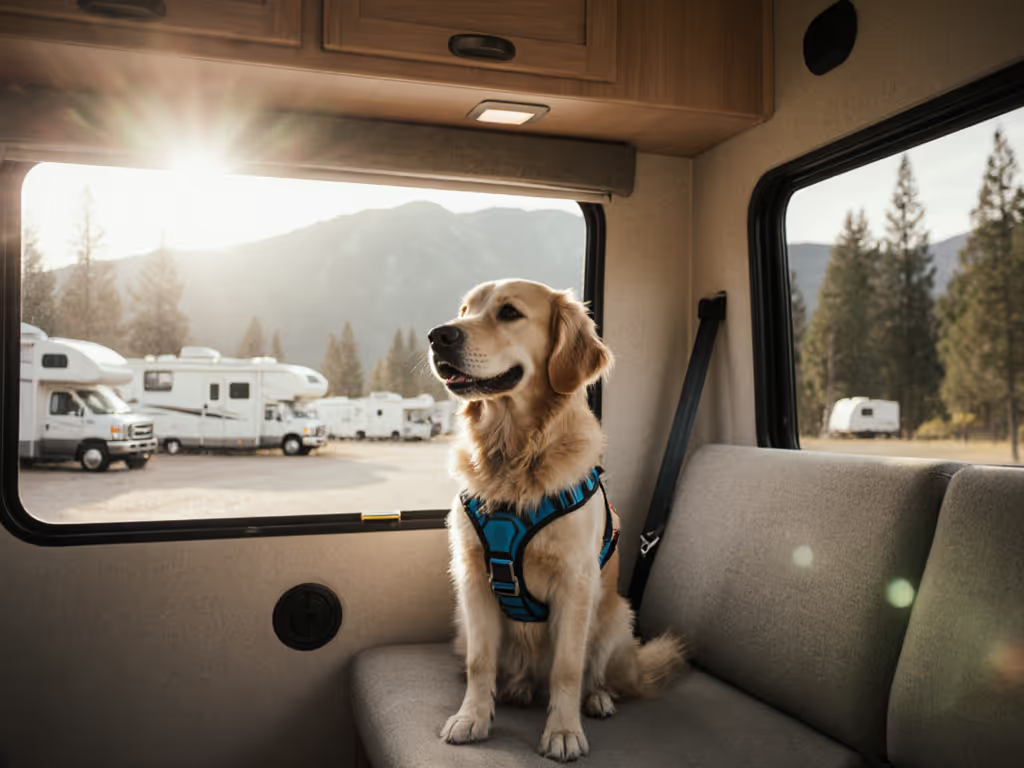
Transporting your dog safely in an RV requires the same rigor you'd apply to car accessories for dog travel in any vehicle, except with additional constraints: limited space, irregular flooring, different anchor points, and unpredictable movement during acceleration and braking. Whether you're towing a travel trailer, driving a Class C motorhome, or converting a van, the restraint choice directly affects your dog's safety, your peace of mind, and whether your rig stays quiet and damage-free during the trip.
This guide answers the critical questions dog owners ask before investing in restraints for motorhome pet travel and recreational vehicle pet restraints. We'll compare tested options, explain what measurements actually matter, and walk through the sequence and tools needed to install them without rattle, sag, or compromise.
FAQ: Dog Car Restraints for RV Travel
What Are the Main Types of Restraints for RV Travel?
Three categories dominate: harness systems, soft carriers, and rigid crates. Each serves different trip profiles and dog sizes.
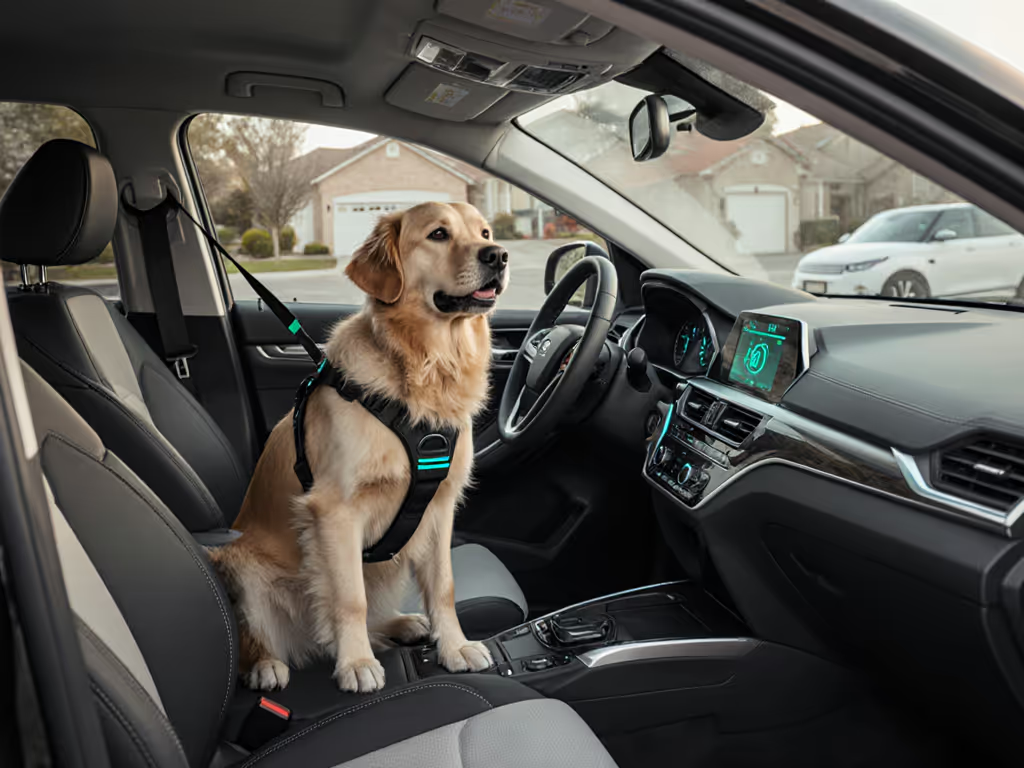
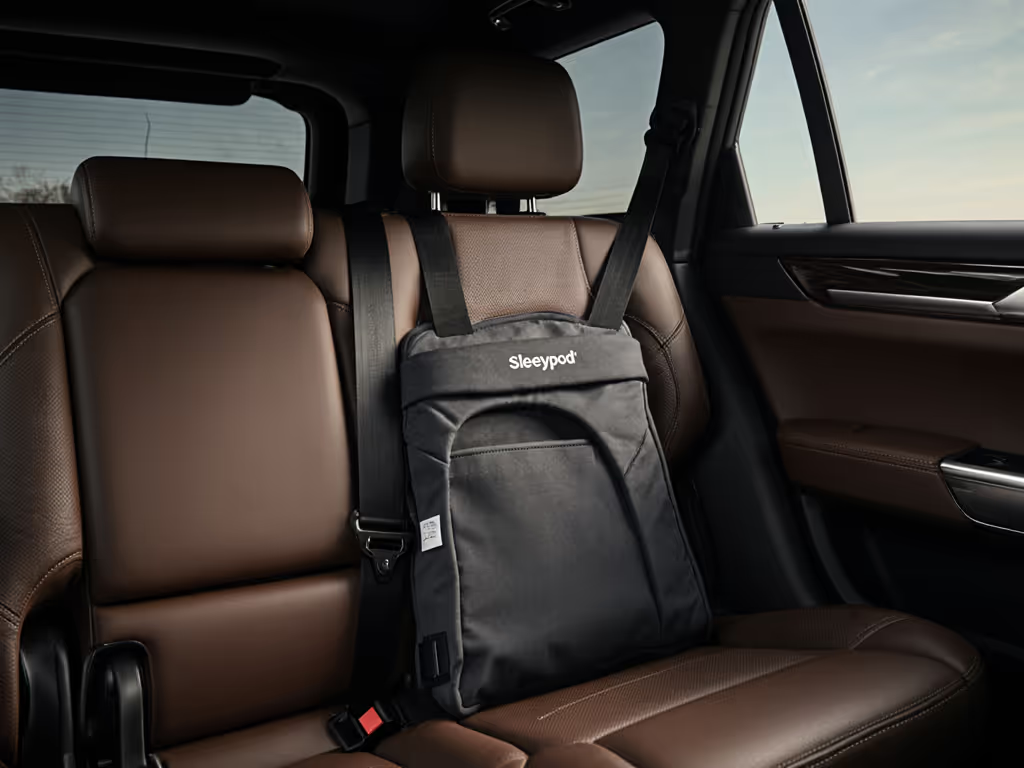
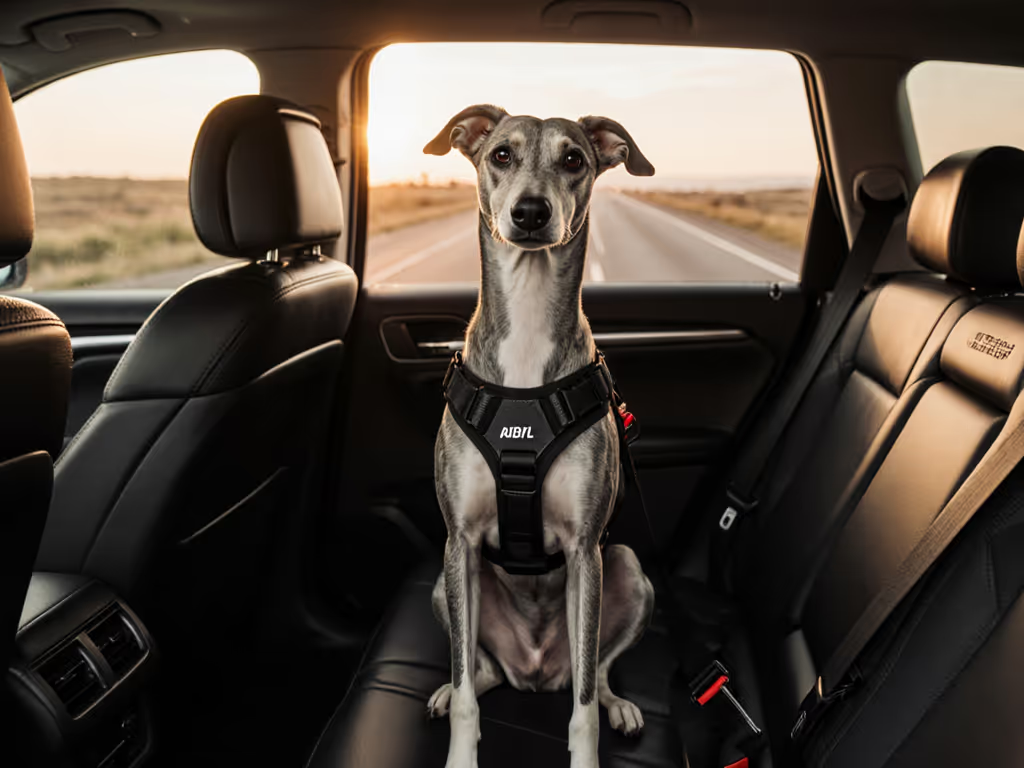
Harness restraints connect to your dog via a vest-style system that threads through vehicle seatbelts or cargo anchors. The Sleepypod Clickit Sport exemplifies this approach (it doubles as a walking harness with shock-absorbing padding and two automotive-grade seatbelt loops built into the vest). This dual-purpose design appeals to RV owners who move between cab and living area. See our dog seat belt comparison for side-by-side safety and fit details. Safety testing shows that during impact, forward motion is contained by the safety belt, with minimal rebound lift and intact hardware.
Soft carriers fold flat for storage and are ideal for small dogs and cats on short trips, though they offer less restraint than harnesses or crates during emergency braking.
Rigid crates are the fortress option: double-wall, rotomolded construction with multiple locking points. The Gunner G1 comes in four sizes, with the small model certified for second-row installation and others rated for truck beds or cargo holds. It ships with a lifetime warranty and is made in the USA, though the tie-down straps cost extra and the unit is considerably heavy. The GunDog Kennel from Cabela's is a budget alternative, single-body molded construction with included straps and a slide lock for under $350.
How Do Crash-Tested Products Compare in Safety?
The Center for Pet Safety (CPS) has tested these products against specific parameters. Learn how CPS testing works in our pet restraint crash testing guide. For harnesses, testers evaluate forward motion containment, rebound lift, strap and zipper integrity, and whether pet legs remain secure during impact. The Sleepypod Clickit Sport passed CPS certification with notable performance: hefty zippers and straps remained intact even with the pet visibly rebounding.
For crates, the GunDog Kennel earned five stars from CPS. Doors remained locked, sliding was minimal, straps did not break, and the crate wasn't fractured. However, testers noted it may deform during impact but "pops right back into place when straps are removed." The Gunner G1, being heavier-duty, resists deformation better due to its double-wall design.
All tested products share a critical requirement: the dog must be anchored to the restraint system via a harness, never by collar alone. A collar-only tether risks choking during sudden stops.
Why Do People Choose Crates Over Harnesses for RV Travel?
Crates provide full containment: the dog cannot fall into the footwell, lunge forward during hard braking, or escape and roam the living area. For multi-dog setups or long road trips, this is valuable. The rigid walls also protect the dog if cargo shifts, and the enclosed space often reduces travel anxiety.
Harnesses, by contrast, require a calm dog and precise strap length. Too long, and the dog can hit the seat in front during braking; too short, and the dog can't lie down comfortably. In an RV where braking patterns are unpredictable (hills, sudden traffic), harnesses demand attention and adjustment.
What Measurements Matter Most for RV Installation?
This is where precision becomes non-negotiable. I learned this the hard way installing a barrier in a CX-5 five years ago (headrest posts that looked identical across model years differed by a fraction of a millimeter). The 2019 had a slight taper; the 2021 had a straight profile. Without a spacer, the 2019's posts rattled in certain resonance zones during highway driving. The 2021 locked silent. That taught me to always carry calipers.
For RVs, measure these specifics:
- Cargo floor depth and width: Is it flat or sloped? Do wheel wells intrude into usable floor space?
- Height from floor to ceiling/roof: Gunner G1 medium is 27 inches tall; if your cargo bay is 28 inches, installation is impossible. Add ventilation space, and clearance vanishes.
- Anchor points: Where are cargo tie-downs? Are they welded to the frame or riveted to composite walls? Some RV floors use extruded aluminum with riveted anchor strips (riveted points can loosen under repeated vibration).
- Hatch or access door swing: Does the crate door swing fully open, or does it hit the RV's rear hatch or cabinetry?
- Seatbelt routing: If using a harness in the cab, which seatbelt path works: lap and shoulder, or lap only? Does the seat have a manual or automatic shoulder strap?
Carry a steel tape and a notepad. Photograph the anchor points and write down three measurements for each dimension (they often vary at the front, middle, and rear of the space). If it rattles, we refit until it doesn't.
What Tools Do I Need for a Rattle-Free Installation?
Tools needed:
- Steel tape measure (25-foot minimum): Pinpoint anchor distances and vertical clearances.
- Torpedo level: Verify cargo floor is truly flat or identify the degree of slope.
- Calipers or depth gauge: Measure post diameters, hatch clearances, and bolt head sizes.
- Torque wrench (if your rig uses bolted anchors): Cargo tie-down bolts should be snug but not over-tightened, which can strip composite walls. Check the RV manual for specifications, typically 15 to 25 ft-lbs.
- Threadlocker (removable grade): Applied to tie-down bolts to prevent vibration-induced loosening. Removable grade (blue) lets you undo them later if you switch setups.
- Rubber shims or spacers: Address the millimeter gaps. If a harness loop or crate wall has slight clearance, a thin rubber shim locks vibration out.
- Socket set and wrenches: For cargo strap hardware and any OEM anchor modifications.
- Inspection mirror or phone flashlight: Verify anchor bolt engagement and strap routing from underneath.
Sequence matters. Lay out the crate or harness system on the floor first, then mark anchor points. Install one strap at 80% tension, then the second and third. Finalize torque only after all are seated. This order distributes load evenly and prevents one over-tightened bolt from bearing the whole load. For step-by-step installs, use our accessories installation guide.
Can I Use the Same Restraint in Both the RV Cab and at Campground Hitching?
Not typically. The Sleepypod Clickit Sport works in a vehicle cabin since it uses the seatbelt system. Once at camp, you'd remove the harness from the seatbelt and use it with a standard leash. Some owners keep a separate harness for walking and a harness-only version for the road, but that's two purchases.
Crates don't move easily between spaces; they're installed and left in place. However, modular soft barriers and pen systems are marketed as "portable" and can be moved between the cab and living quarters, though they're not crash-tested and are best used only when the RV is stationary.
How Do I Handle Multi-Dog Restraint in Limited RV Space?
With two dogs, assume you'll need either two small crates or one large crate plus a harness. See space-smart picks in our multi-dog travel accessories guide. Avoid stacking or cramping dogs into one space; stress and sickness follow. Two harnesses in the cab work only if the dogs are calm and trained. In cargo, two crates require careful anchor planning. Four tie-downs per crate means eight total, and not all RV anchor strips support that density.
Measure the anchor strip spacing before committing. Some are 4 inches apart; others, 6 inches. If you need eight attachment points and your strip only has six usable slots, you'll need to reinforce or use alternative anchors (welded tabs or frame-mounted bolts), which requires professional modification.
What About Climate and Ventilation in the Cargo Area?
Crates contain heat. In summer, a dog in a cargo crate with a closed hatch will experience significant temperature rise, even if a skylight or vent is open. Soft carriers fare better since their mesh panels allow airflow. Harnesses in the cab with climate control are ideal for warm weather.
If your dog must ride in the cargo area, install a power vent or ensure hatch windows are cracked (and secured so the dog can't push through). Monitor interior temperature and take frequent breaks. Get proven options in our dog car cooling comparison. In winter, crate walls can become cold. A blanket underneath and inside helps. Frozen water bowls are useless; use collapsible bowls filled fresh at each stop.
What Should I Watch for When Installing a Harness in the RV Cab Seatbelt?
First, check whether your RV cab has LATCH/ISOFIX anchors. Most RVs don't; they rely on seatbelts. When routing the Sleepypod Clickit Sport or similar harness through a seatbelt, ensure:
- The latch plate threads cleanly through both harness loops (top and bottom).
- The shoulder strap path doesn't twist. Twisted shoulder straps can unload during braking and fail to restrain.
- Seatbelt pretensioners don't interfere. Some modern cab seatbelts have load-limiting pretensioners designed for humans; they may not hold a harness perfectly rigid, but they're safe, and the harness will absorb the shock.
- Strap length is adjusted so the dog can lie down but cannot launch forward more than a few inches during emergency braking.
Sequence: Fasten the lap belt first, thread the harness loops, then secure the shoulder strap. Double-check routing before the first trip.
Are There RV-Specific Legal Requirements for Pet Restraints?
Few states or provinces mandate pet restraints by law, but a growing number recommend them and may hold the driver liable if an unrestrained pet causes an accident. Check your state or province's vehicle code and insurance policy. Some insurers offer discounts for documented safety measures.
Moreover, many RV parks and campgrounds include animal control clauses that require dogs to be leashed or crated when unattended, not just during travel but also in awning areas and common spaces. A crate or harness that's travel-certified often satisfies these requirements.
Actionable Next Steps
Before purchasing a restraint system, follow this sequence:
- Measure your RV cargo or cab space using the dimensions checklist above. Note the anchor point type (welded, riveted, bolted frame) and spacing.
- Identify your dog's size, temperament, and trip profile: Is this a calm daily commute, a three-week road trip, or an overnight vet visit? Anxious dogs may need crate containment; calm dogs work well in harnesses.
- Cross-reference your vehicle specifications with product certifications and fitment guides. Gunner G1 and GunDog both publish anchor compatibility notes; Sleepypod lists seatbelt types. Don't assume "universal fit"; verify.
- Gather your tools and schedule installation on a day when you can inspect, torque, and test without rushing. Rattle-free installs take an hour; rushed installs take a week of fixing.
- Install one system fully, test it with your dog stationary, then test during light driving before a long trip. Listen for noise; if it rattles, refit until it doesn't.
Your dog's safety in a camper van starts with honest measurements and a sequence-driven install. Clean restraints aren't magic: they are precision, the right tools, and patience applied to your exact RV layout.
Related Articles