Small Dog Crates for Hatchbacks: Soft vs. Hard
By Luis Andrade • 23rd Feb
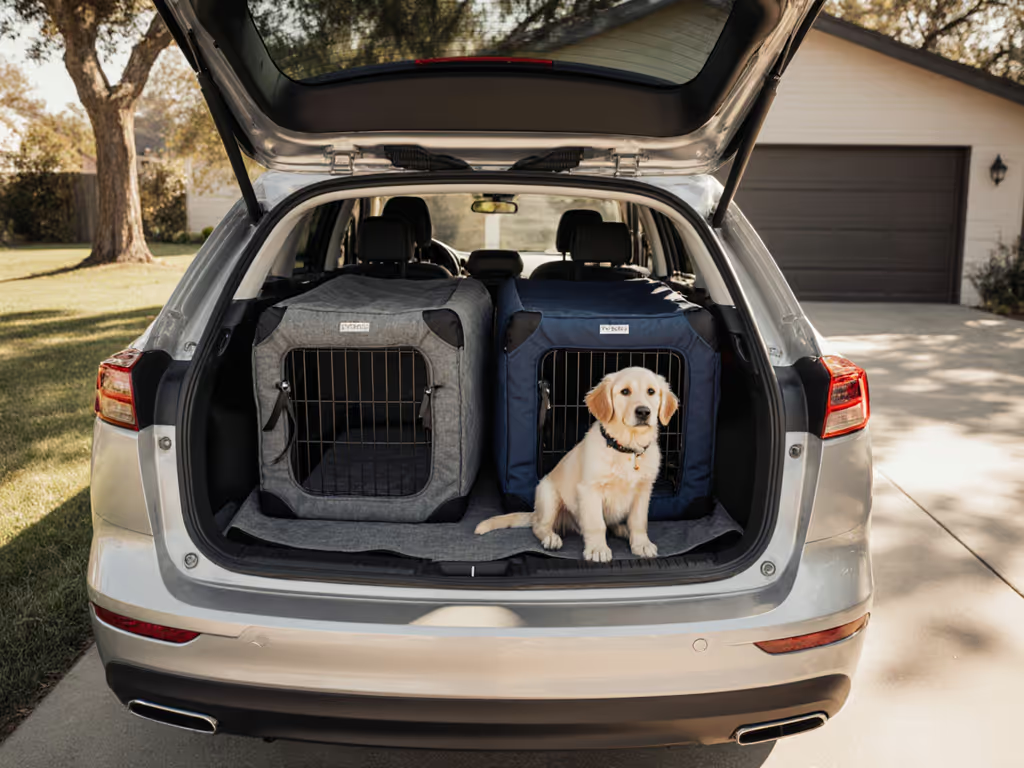
If you own a hatchback and travel regularly with a small dog travel crate, you've likely discovered that "universal fit" means nothing when your cargo door has a threshold and your hatchback slopes at an angle your crate wasn't designed for. Choosing between soft vs. hard crate for small cars requires more than brand loyalty; it demands an honest assessment of your vehicle's geometry, your dog's behavior, and which containment style actually anchors securely without drifting, rattling, or blocking your trunk utility. This guide breaks down both types with a focus on what works in hatchbacks, where every centimeter of space and every point of contact matters.
Why Hatchbacks Demand Specific Crate Design
Hatchbacks, station wagons, and similar vehicles with a cargo threshold (or sill) at the rear door present a unique constraint that sedan and SUV buyers rarely face. Unlike a truck bed or open cargo floor, a hatchback's interior step (typically 4 to 8 inches high) forces you to choose between lifting the crate over the sill (adding height you don't have) or tilting it at an angle that makes securing it flat nearly impossible.
The slope of your hatchback's cargo floor also varies by model year. I learned this the hard way on a barrier install in a 2019 Mazda CX-5: the headrest posts looked identical to the 2021 model at first glance. But when I measured them with calipers, the 2019's taper was slightly sharper (millimeters that mattered). The original spacer rattled in the 2019; the 2021 locked silent with the same hardware, only after I rechecked the geometry. That taught me that hatchback crate selection isn't just about size; it's about threshold clearance, floor angle, and door swing geometry. If it rattles, we refit until it doesn't.
Hatchback-specific best dog crates for car travel account for this reality in their design. The MIM Variocage Compact, for instance, is engineered with a raised front door specifically to clear vehicle thresholds without requiring special mounting or a platform, leaving considerable cargo space behind the crate. This model-aware approach is what separates a fit that works from a fit that slides.
Hard Crates: Structure, Crash Testing, and Trade-Offs
Hard crates (typically rotomolded polyethylene or steel kennels) offer the highest level of structural containment and protection. They're rigid, lockable, and don't degrade or sag over time like soft-sided alternatives.
Crash Safety and Testing
The single biggest advantage of hard crates is crash-tested certification. Products like the GUNNER G1 Kennel have passed formal crash safety testing and come with tie-down pins for secure anchoring to cargo tie-downs. This isn't marketing; it is third-party validation. If your decision hinges on the highest measurable protection during a collision or hard braking event, crash-tested hard crates are the only category with real evidence.
Weight, Portability, and Removal
Hard crates are heavy. A GUNNER Intermediate weighs approximately 35 lbs empty; the RuffLand Intermediate alternative weighs around 22 lbs. That 13-pound difference sounds modest until you're extracting a crate after your dog has gotten sick during a road trip or you're moving it between vehicles. If nausea is an issue, see our dog car sickness prevention guide for evidence-based fixes before your next trip. The lighter weight of RuffLand kennels comes with a trade-off: their non-locking door design is less secure than GUNNER's locking system, though still solid for most calm dogs.
Hatchback Fit Challenges
For hatchback owners, hard crates present a dimensional puzzle. The deeper the crate (front-to-back), the more cargo space it consumes. Many hard crates are optimized for SUVs and trucks, where vertical space is abundant; in a hatchback, you're often forced to choose between a crate that technically fits width-wise but won't clear your hatchback's slope or a crate so compact that it limits your dog's comfort on longer trips.
Measuring your hatchback's usable cargo depth (from the threshold to the back seat when folded, accounting for the floor slope) is non-negotiable. Caliper work here saves returns.
Maintenance and Cleanliness
Hard crates are easier to clean than soft ones. Rotomolded polyethylene surfaces resist water penetration and hair adhesion; a rinse and wipe take minutes. But they're bulky to store when not in use and take up meaningful space in a garage or shed.
Soft Crates: Collapsibility, Portability, and Limitations
Soft-sided, collapsible crates (often fabric-framed or mesh enclosures) prioritize packability and portability over structural rigidity.
Storage and Travel Convenience
Soft crates fold flat or compress into a manageable bundle. For dog owners who don't travel constantly or who need crate portability between a car and an airline cabin, this is valuable. The Orvis Hose-Off Folding Travel Crate, for example, is a sturdy soft option relative to its category, includes a plush fleece bed, and comes in Small (31.2"), Medium (36"), and Large (42") dimensions starting at $160.
Limitations in Crash Events and Hard Stops
Soft crates provide containment but not crush protection. In a collision or extreme hard braking, the fabric frame alone cannot shield your dog from forward forces the way a rigid plastic or steel kennel can. This is why crash-safety organizations and veterinarians consistently recommend hard crates for frequent travelers or long highway trips.
Soft crates also lack effective locking mechanisms. Most rely on zippers or velcro, both of which can fail or be compromised if your dog panics or if the crate shifts during transit.
Hatchback-Specific Considerations
Soft crates are lighter and more flexible (literally), so wedging one into a hatchback's odd angles is easier than forcing a rigid kennel into the space. But that flexibility is also a liability: a soft crate can sag, shift, or compress unevenly under braking, leaving your dog unsecured and stressed. A hatchback's tight cargo area can amplify this problem: there is less room for the crate to slide around, but also less room for it to breathe or stay ventilated.
Cleanup after mud, drool, or accident is faster with some soft crates (especially those with removable, washable liners), but fabric absorbs odor and moisture more readily than plastic, particularly in humid climates or after wet-weather trips.
Soft vs. Hard: Analytical Comparison
| Criterion | Hard Crate | Soft Crate |
|---|---|---|
| Crash Protection | Independently tested and certified (GUNNER, Thule Allax); rigid structure absorbs impact | Fabric frame provides containment only; no crush protection |
| Weight | Heavy (22-37 lbs); portability requires dedicated space | Light (5-12 lbs); folds for car, home, or travel |
| Durability | Rotomolded plastic resists chewing, scratching; lasts 10+ years | Fabric wears, zippers fail, liners develop odor; 3-5 year lifespan typical |
| Hatchback Fit | Requires precise measurement; may not clear threshold or door slope | Flexible; easier to wedge into odd spaces; less stable in tight quarters |
| Ventilation | Passive airflow through door and design; can be stacked with cargo around it | Mesh sides offer good airflow; sags or compresses, reducing airflow under load |
| Cleaning | Rinse and wipe; debris doesn't embed | Machine-washable liners; fabric absorbs odors and stains |
| Cost | $300-$650+ | $150-$250 |
| Locking | Secure locking door mechanism | Zippers or velcro; not reliable in crashes or hard stops |
| Portability | Stays in one vehicle; difficult to move between cars | Collapses and folds; ideal for multi-vehicle households |
Installation Logic: Sequence and Anchoring
Regardless of crate type, installation in a hatchback follows a sequence-driven approach.
Step 1: Measure Your Threshold and Slope
Before purchasing, measure three dimensions:
- Threshold height - How far up from the floor is your cargo door sill?
- Usable depth - From threshold to back seat (fully folded), how deep is the cargo area?
- Floor slope angle - Does the floor angle upward toward the back seat, or is it flat?
Have calipers and a level handy. For step-by-step anchoring tips and common mistakes, see our field-tested installation guide. A smartphone level app works, but precision matters when clearance is tight.
Step 2: Choose a Crate That Clears the Threshold
If your hatchback has a pronounced threshold, seek designs with a raised front door (like the MIM Variocage Compact) or plan to angle the crate slightly, using spacers or shims to maintain stable, level footing. Generic hard crates won't solve this without modification, and modification introduces rattle and instability.
Step 3: Secure to Anchor Points
Hard crates should anchor to cargo tie-downs or the vehicle's ISOFIX/LATCH points if accessible. Use cargo tie-down straps rated for the crate's weight, and set them snug but not over-torqued (check your crate's manual for recommended tension). Threadlocker on bolt threads prevents vibration loosening over months of trips.
Soft crates, lacking proper locking points, rely on friction and tethers (less ideal), but if used, anchor tether points to fixed cargo tie-downs, not to the crate's zipper pulls.
Install time: A properly measured, fitted hard crate should anchor in under 10 minutes. If you're adjusting, adding spacers, or troubleshooting fit, expect 20-30 minutes. Soft crates typically take 5 minutes but offer less security assurance.
Step 4: Check for Rattle
Once installed, close the hatchback, sit in the driver's seat, and listen. Push the crate gently side-to-side. It should not shift more than a quarter-inch. If it does, tighten straps, adjust spacers, or reconsider the model. A rattling crate stresses you and your dog and indicates a suboptimal fit.
Hatchback-Optimized Models and Considerations
MIM Variocage Compact
Specifically designed for hatchbacks, station wagons, and similar vehicles with a threshold, the Variocage Compact features a raised front door to clear vehicle sills and comes in adjustable sizes to fit your vehicle and dog. Its small footprint maximizes remaining cargo space, addressing one of the core frustrations of hatchback owners: losing trunk utility entirely to a crate. For a broader setup beyond crates, explore our compact car dog accessories guide tailored to hatchbacks and small sedans.
RuffLand Kennels
Available in Small, Intermediate, Large, and XL sizes, RuffLand kennels weigh significantly less than comparable GUNNER models (22 lbs for Intermediate versus 35 lbs), making them practical for hatchback owners who move their crates regularly between vehicles. The trade-off is a non-locking door; for calm, trained dogs and shorter trips, this is acceptable. For anxious or reactive dogs, the lack of a locking mechanism is a liability.
Soft Alternatives: Orvis Hose-Off Folding Travel Crate
For hatchback owners prioritizing packability and occasional travel, the Orvis Hose-Off Folding Travel Crate is a sturdy soft option relative to its category, includes a washable fleece bed, and costs $160 to start. Its sturdiness versus standard fabric crates makes it more stable than ultra-budget alternatives, but it still lacks crash-test certification and locking security.
Making Your Decision: A Hatchback Owner's Checklist
Before you choose, ask yourself:
-
How often do you travel with your dog? Daily commutes and weekend trips justify hard-crate investment. Occasional airport runs or vet visits suit soft crates.
-
What's your dog's temperament? Anxious, reactive, or escape-prone dogs need hard crates with locking doors. Calm, trained dogs tolerate soft crates better.
-
Does your hatchback have a pronounced threshold or steep floor slope? If yes, prioritize crates designed for your geometry (like the Variocage Compact) or skip generic hard crates.
-
How important is cargo space behind the crate? Hatchback cargo areas are precious. Crates with a small footprint (like Variocage Compact) preserve utility; larger hard crates consume most of your trunk.
-
Will you move the crate between vehicles? If yes, weight and packability matter. RuffLand or soft crates win. If the crate stays in one car, weight is less critical.
-
Do you need crash-test certification? If safety during collisions is a priority (which it should be for frequent highway travelers), choose only hard crates with independent testing, like GUNNER or Thule Allax.
-
What's your budget for maintenance and replacement? Hard crates cost more upfront but last 10+ years; soft crates cost less initially but wear out in 3-5 years and accumulate odor.
Actionable Next Steps
Measure first. Get your hatchback's exact threshold height, cargo depth, and floor slope. Write these numbers down and reference them against any crate's listed dimensions. Don't skip this; it's the single best predictor of fit success.
Prioritize crash-tested models if highway travel is frequent. Independent certification matters. Look for brands that list Center for Pet Safety or equivalent third-party testing.
Test the crate's stability in the showroom or via a trial period. Rock it side-to-side. It shouldn't shift. If it does in-store, it will rattle at highway speeds.
Ask about model-year compatibility. A crate that fits a 2021 hatchback may not fit a 2019 of the same model if the geometry differs. Reputable brands will tell you this upfront or offer a return window.
Choose based on your trip profile, not brand hype. A $150 soft crate is fine for occasional vet visits; a $600 hard crate is necessary for a 500-mile road trip with a reactive dog. Both are correct choices, just in different contexts.
Your hatchback and your small dog deserve a crate that fits without compromise: secure, quiet, and measured to your car's exact geometry. Clean installs aren't magic; they're measurements, proper sequence, and checked torque. Take the time to get it right the first time, and you'll have a setup that lasts and a calm ride ahead.
Related Articles