How Car Exhaust Damages Your Dog's Respiratory System
By Luis Andrade • 2nd May
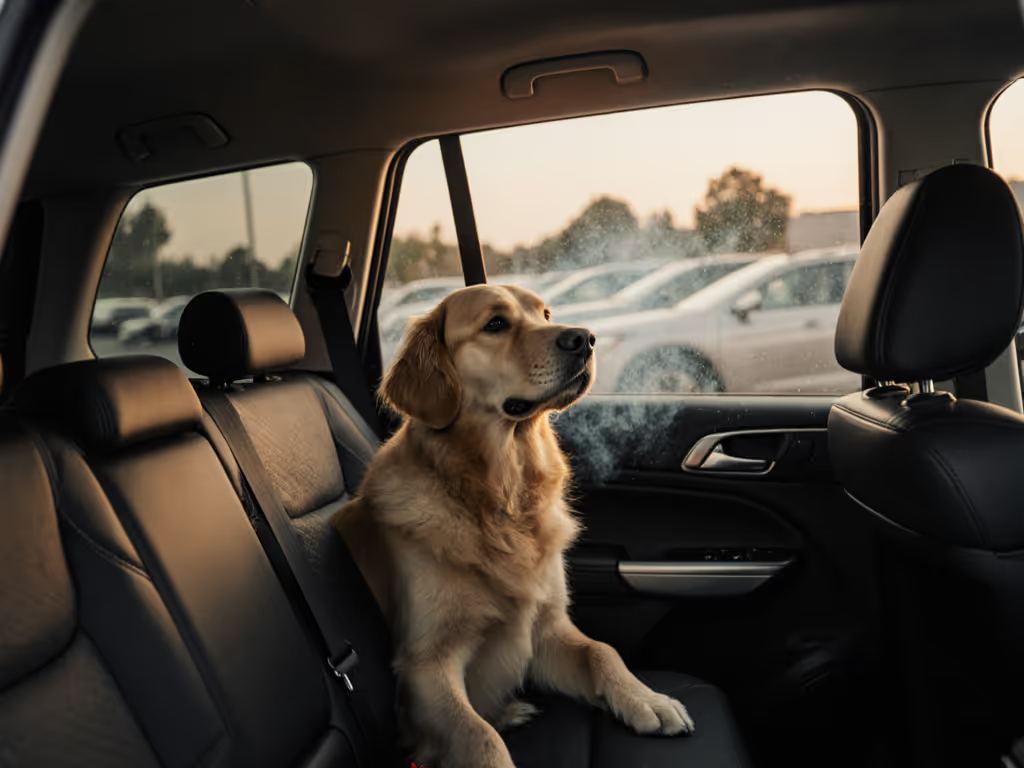
Understanding Exhaust Exposure During Car Travel
When you're driving your dog regularly, car exhaust health effects during dog car travel become more than a theoretical concern. Dogs riding in vehicles (especially in rear seats or cargo areas) inhale higher concentrations of particulate matter and nitrogen oxides than they would outdoors or at home. Over months or years of commuting, short trips to the vet, or weekend road excursions, this cumulative exposure can stress their respiratory system. The good news is that understanding why exposure happens, and then redesigning your car setup and ventilation strategy, can dramatically reduce your dog's risk.
Why Your Dog Breathes Dirtier Air in the Car
The physics is straightforward. Vehicle exhaust rises and recirculates. It doesn't simply exit behind you. When your climate control is set to recirculate mode (a feature designed for rapid heating or cooling), cabin air cycles back through the same ducts repeatedly, concentrating pollutants. Dogs in the back seat or cargo area, especially in sealed crates or behind solid barriers, sit in zones of poor air exchange. Add idling in traffic, and exhaust levels in a parked vehicle spike to 5-10 times higher than highway levels within just 10 minutes, a fact confirmed by automotive HVAC research.
Small-breed and senior dogs face extra vulnerability because their airways are already narrower and more prone to irritation. A brachycephalic dog (like a Bulldog or Pug) working harder to breathe in a carbon dioxide-rich, particulate-heavy cargo zone experiences measurable strain compared to the same drive with proper ventilation.
FAQ: Exhaust Exposure and Your Dog's Health
Q: What actually happens to a dog's lungs and airways from exhaust exposure?
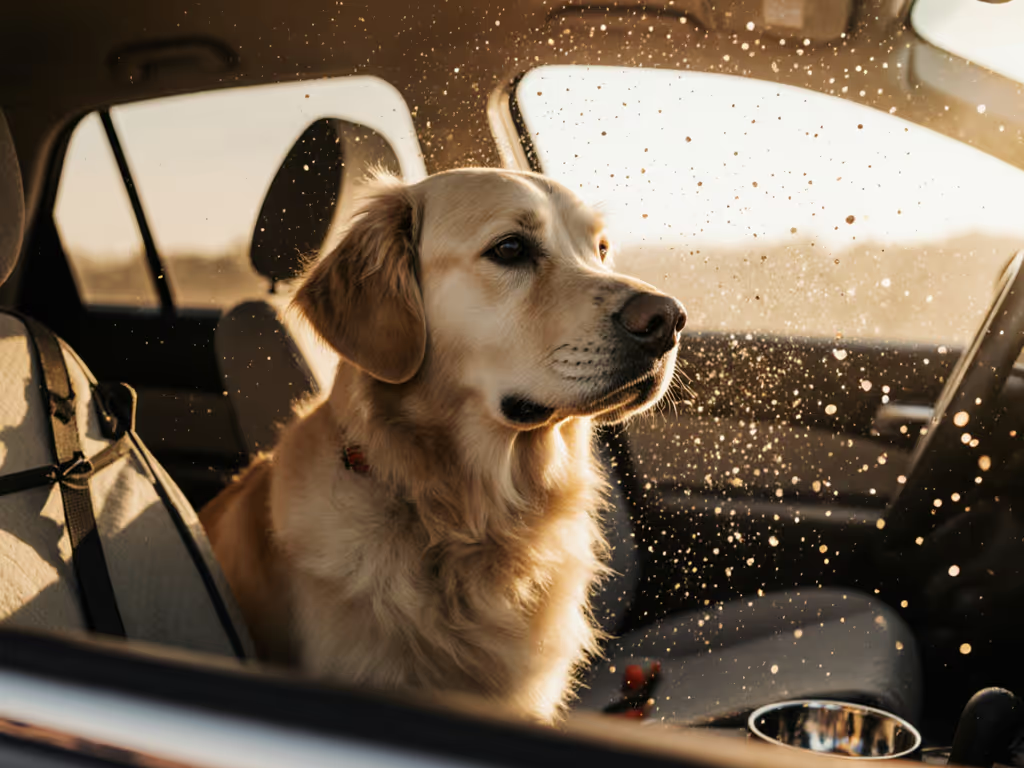
Repeated inhalation of vehicle emissions irritates the mucosal lining of the respiratory tract. Particulate matter (soot, brake dust, tire wear) embeds in airways; nitrogen oxides and carbon monoxide reduce oxygen-carrying capacity. Over time, this inflammation can trigger coughing, reduce exercise tolerance, or exacerbate allergies and asthma-like symptoms. Not all dogs show obvious symptoms. Some carry silent irritation for months until a stress event (illness, heat, exertion) surfaces a respiratory problem. The damage is cumulative and often preventable with better car setup.
Q: How much exposure is too much?
Daily 30-45 minute commutes without fresh-air ventilation pose real risk, especially in urban traffic. Weekend trips or occasional vet visits in well-ventilated cars pose minimal concern. The difference lies in frequency, duration, and airflow management. A dog riding three times a week in a cargo crate with zero ventilation for 20+ minutes each trip is accumulating damage. The same dog, positioned on a rear seat with climate set to fresh-air and windows cracked, breathes cleaner air with each trip.
Q: Does seating position and cargo arrangement really affect exhaust exposure?
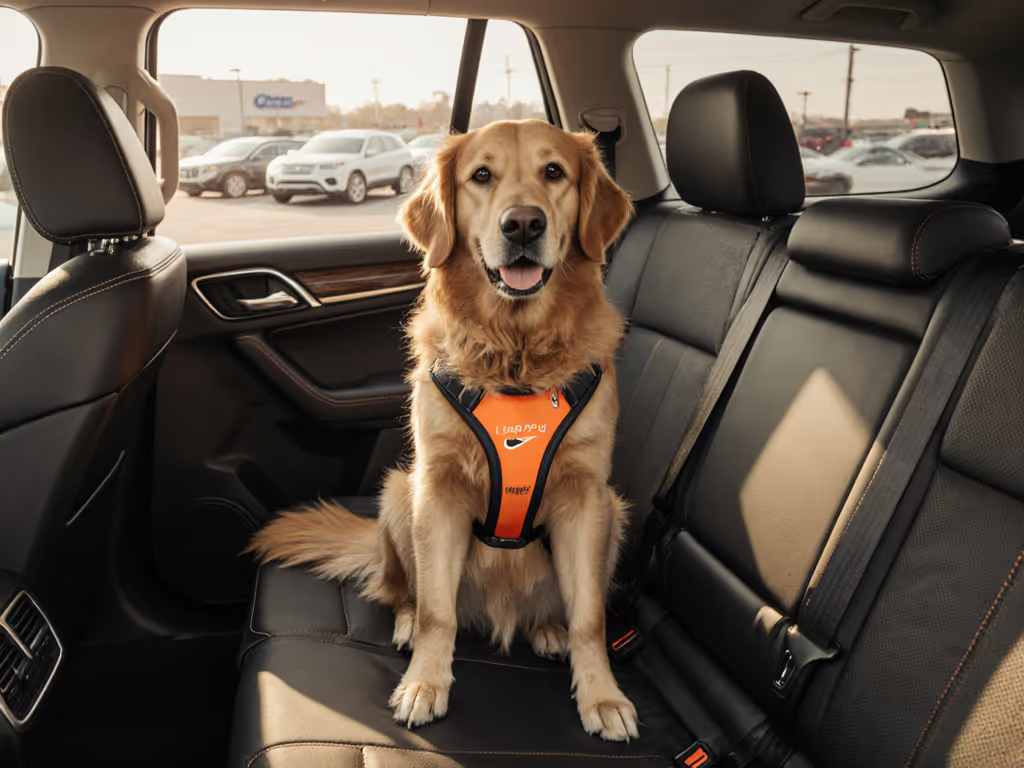
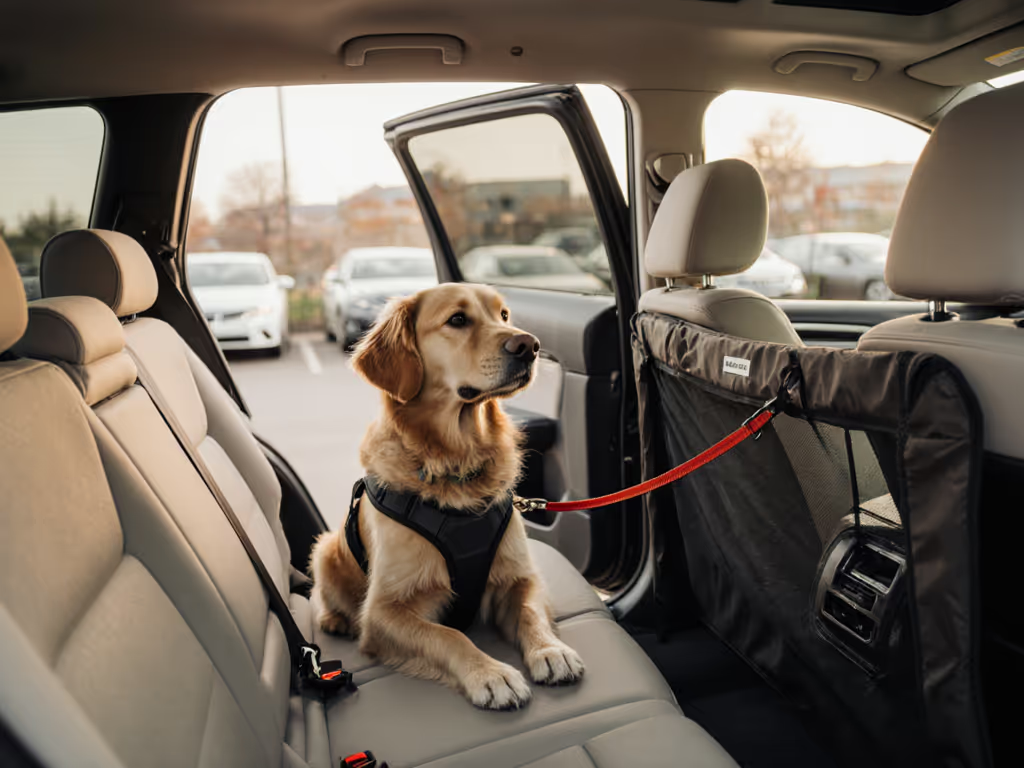
Absolutely. This is where dog respiratory health car travel setup becomes measurable. A dog in a rear cargo area with a solid barrier behind sealed rear windows sits in a micro-environment of trapped air and high pollutant concentration. A dog on the rear seat, harnessed securely, sits higher in the cabin where fresher air stratifies above exhaust plumes. Front-seat riding (when safely restrained, never loose) places the dog in the cleanest zone, though many owners prefer back-seat placement for safety during emergency braking.
Q: Can window placement and ventilation actually reduce exhaust levels?
Yes, measurably. Running climate on fresh-air mode (pulling in outside air rather than recirculating) and cracking rear windows 2-3 inches creates passive airflow that can reduce in-cabin exhaust concentrations by 30-50% on highway drives. On shorter trips under 20 minutes, this is the single most effective intervention. For hot-weather setups that complement airflow, see our dog car cooling solutions. It costs nothing and works immediately.
Measuring and Optimizing Your Car's Ventilation Setup
Step 1: Map Your Vehicle's Airflow Architecture
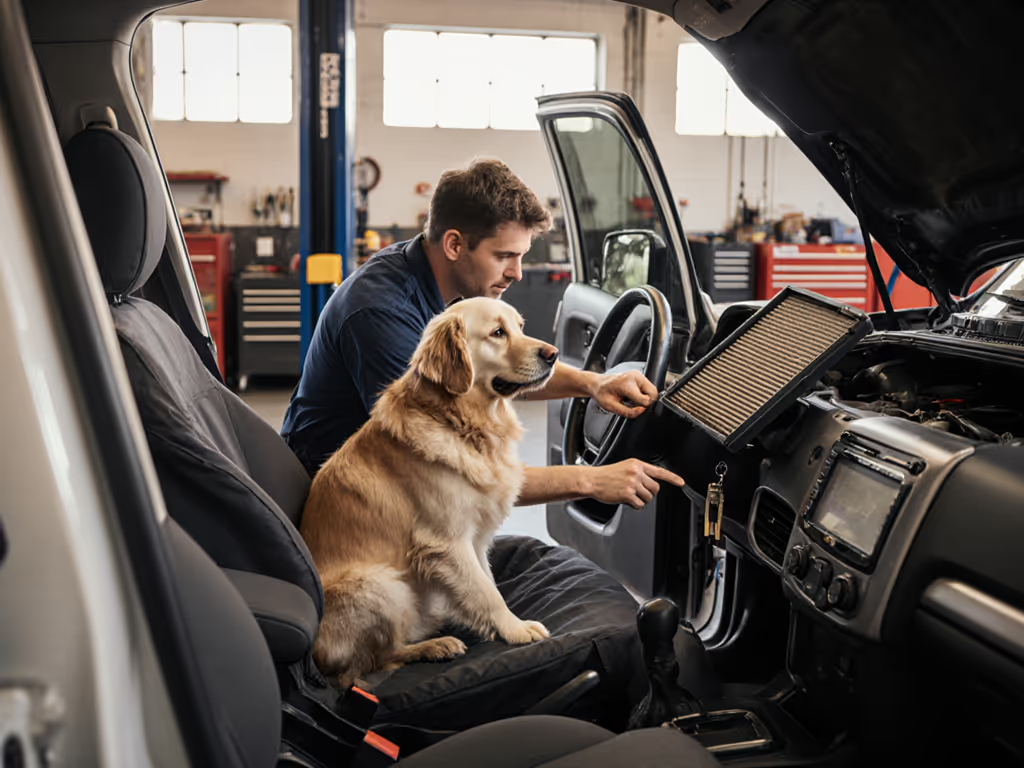
Before choosing a crate, barrier, or harness setup, understand your specific car's climate and airflow. Measure:
- Which rear windows roll down fully (vs. partial drops)
- Whether rear vents recirculate cabin air or pull fresh outdoor air
- The position of cargo-area vents relative to where your dog will ride
- Whether your climate has a manual fresh-air setting, and how clearly it's labeled
- The hatch slope and cargo floor height (relevant for crate ventilation holes)
This isn't guesswork; it's data collection. The same precision you'd apply to selecting a safety harness by seat geometry applies here. A millimeter of window opening, a vent position, or recirculation setting often means the difference between stale, pollutant-heavy air and breathable space.
Step 2: Position Your Dog Higher, Not Lower
Cargo floors trap air. Rear seats don't. A dog secured on a rear seat via a crash-tested harness tethered to the seat frame sits 12-18 inches higher and breathes air that's been slightly stratified. Cleaner air rises, denser pollutants settle. A dog in a floor-level crate or cargo crate breathes from the lowest, most contaminated zone in the vehicle.
If a crate is your choice, elevate it on a riser platform (if space allows) or ensure it has mesh panels on at least two sides for cross-ventilation. If you're deciding between designs, compare soft vs. hard travel crates for ventilation, safety, and fit. If it rattles during braking, shim it with non-slip rubber until it doesn't (a rattling crate creates micro-gaps that do help airflow, but the noise stresses both dog and driver).
Step 3: Run Climate on Fresh-Air During Every Trip
Install time: two seconds (changing a climate setting). Before every trip with your dog:
- Switch from Recirculate to Fresh Air or Outside Air
- Leave it there for the entire drive
- If your car lacks a manual setting, use the defrost mode, which forces fresh air
This single habit reduces exhaust pooling more than any barrier or crate modification. On a 30-minute commute, fresh-air mode cuts recirculated pollutants by roughly half.
Step 4: Never Leave the Engine Running
If you stop (waiting for a vet appointment, a coffee run) turn off the engine immediately. A running car with a dog inside creates a toxic micro-chamber. Within 10 minutes, exhaust concentration climbs to levels that would cause most people to crack windows in panic. Park in shade, crack windows as far as your dog cannot jump out, and turn off the engine.
If it rattles, we refit until it doesn't - and if your dog wheezes or shows labored breathing during or after drives, we adjust ventilation until it doesn't.
Actionable Next Steps to Reduce Your Dog's Exhaust Exposure
-
Test your climate control: Drive with your dog for 15 minutes on fresh-air mode with rear windows cracked. Observe breathing rate and energy level. This is your baseline.
-
Reposition if possible: If currently using a cargo crate, trial a rear-seat harness for the same route. Compare your dog's post-drive behavior - breathing, alertness, any coughing or fatigue.
-
Measure your crate ventilation: If a crate is non-negotiable, ensure mesh panels cover at least 40% of wall area and the crate sits at least 6 inches off the cargo floor to allow under-cage airflow.
-
Set a climate reminder: Label your climate control knob or set a phone reminder to switch to fresh-air before trips. This habit sticks after three weeks and becomes automatic.
-
Log your dog's response: Track post-drive behavior over two weeks - coughing incidents, energy, water intake, sleeping patterns. Improved ventilation often leads to visibly calmer, less-restless rides.
Clean installs aren't magic; they're measurements, proper sequence, and checked outcomes. Apply that same rigor to ventilation and exhaust exposure. Your dog's respiratory system will thank you.
Related Articles