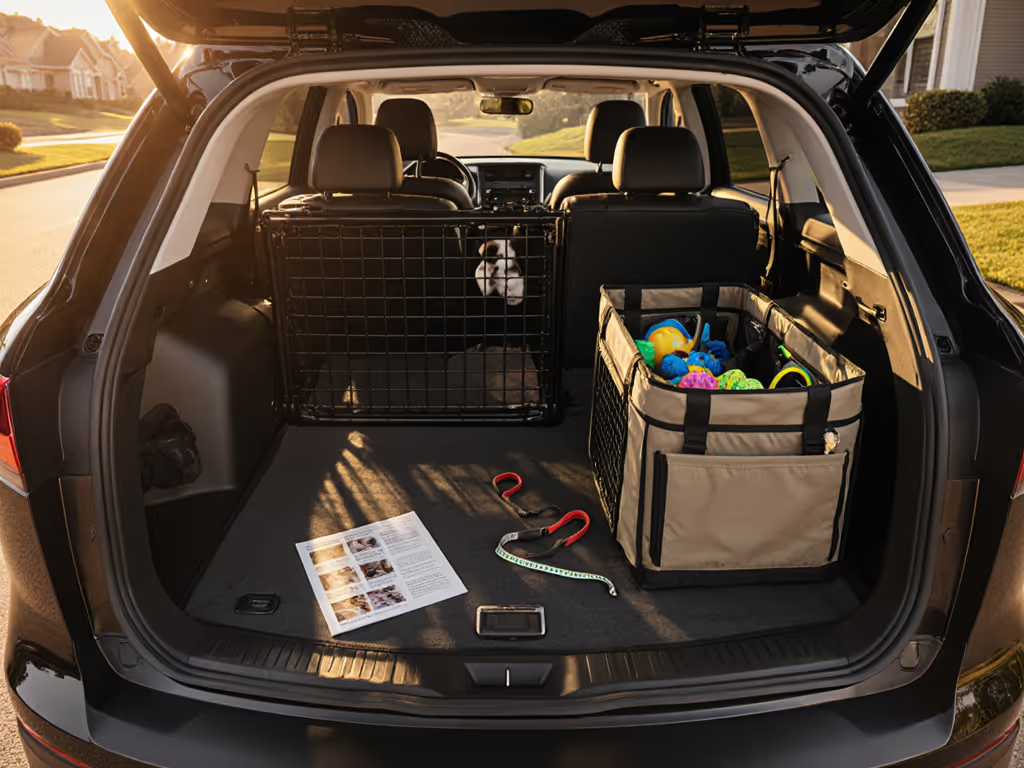
Dog Car Seat Covers with Smart Tech: Honest Comparison
By Aisha Rahman • 4th Apr
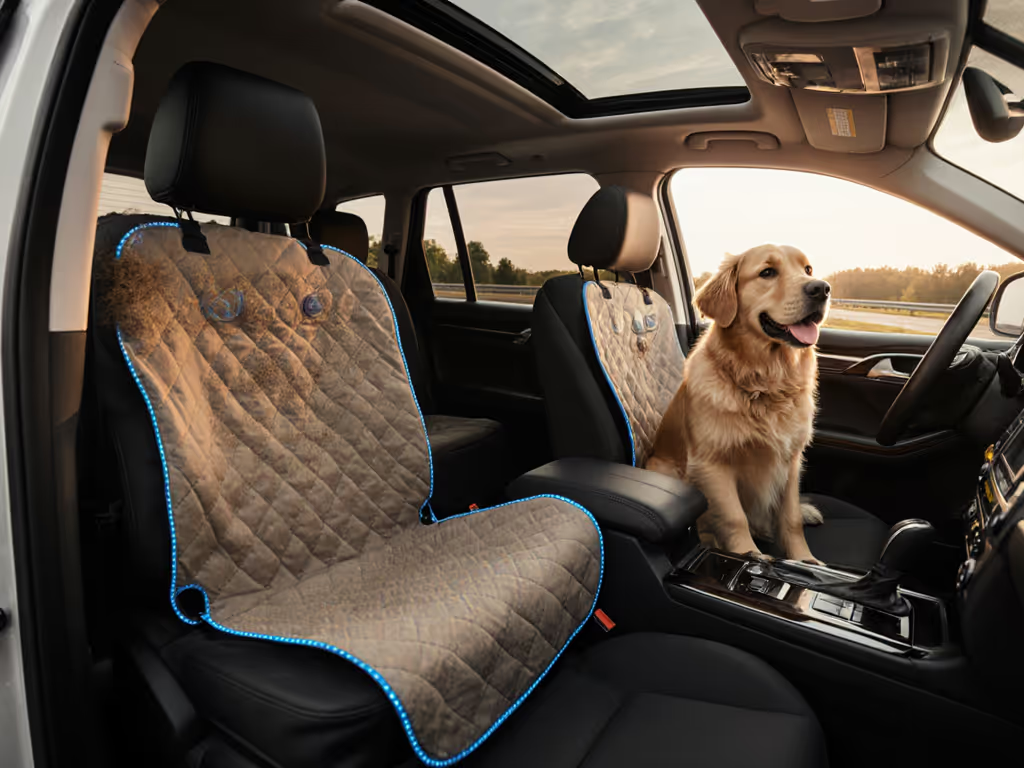
When you're shopping for a dog car seat cover, you'll encounter terms like "smart," "connected," and "adaptive" increasingly often. Yet the reality is more nuanced than the marketing. Dog car seat covers in 2026 are evolving, but true smart-tech integration remains sparse. What matters far more is understanding what makes a cover work, and work reliably, for your dog and your vehicle.
What Do "Smart" Dog Car Seat Covers Actually Do?
Honestly? Most covers labeled "smart" today are standard hardware with thoughtful design rather than internet-connected gadgetry. A few manufacturers are experimenting with materials that respond to temperature or pressure, but they're not mainstream. When I evaluate a smart pet seat cover comparison, I'm looking at three real advantages:
-
Intelligent material selection: Fabrics with temperature-regulating properties or moisture-wicking meshes that adapt to cabin conditions. ShearComfort and similar makers now use waterproof CORDURA®, a material engineered to shed water while remaining breathable, a genuine step beyond basic polyester.
-
Modular anchor systems: Smart design means multiple attachment points that work across LATCH, cargo tie-downs, and seat-belt loops without guesswork. Kurgo's multi-point approach eliminates sliding.
-
Behavioral architecture: A cover that prevents dogs from falling into the footwell, reduces noise transfer, and maintains a consistent riding surface actually is a form of smart design. A dog that doesn't slide is a dog that doesn't panic, and that's a safety multiplier in motion.
FAQ: Breaking Down the Comparison
Do I actually need a "smart" cover, or will a standard one work?
Start with your dog's stress profile. A calm, settled traveler may be fine with a basic waterproof layer. But if your dog trembles at lane changes, paces, or gets car-sick, cover choice becomes critical. A year ago, I worked with a shepherd mix who was terrified of vehicle motion. We rebuilt her routine around a secure, quiet setup: a crate with a covered hammock-style cover, anti-rattle anchors, and treats only when buckled. By week three, her breathing slowed before we even started the engine. Comfort isn't fluff; it's the difference between panic and a predictable ride. For step-by-step techniques to reduce travel stress, see our guide to positive car associations.
That shepherd taught me something foundational: even a "standard" cover with the right fit and noise profile often outperforms an expensive, poorly-fitted "smart" alternative. The features that matter are those that keep the dog still, safe, and calm.
What's the difference in material between standard and smart-tech covers?
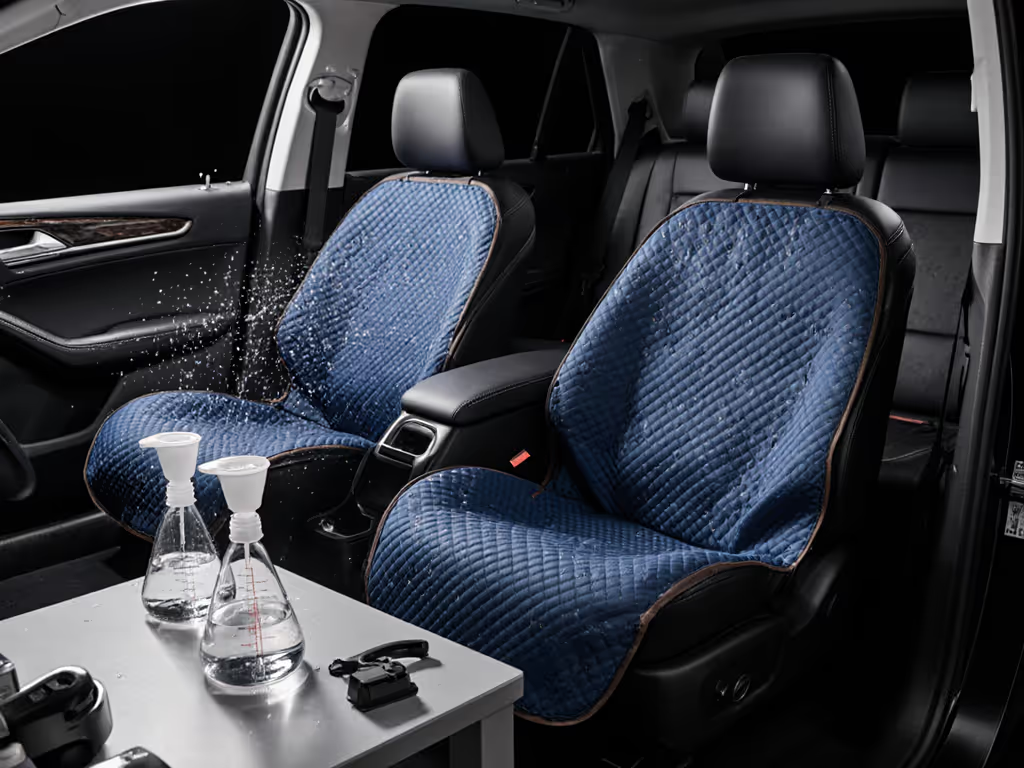
Traditional polyester covers are durable but transmit vibration and noise directly into the cabin. Newer materials, especially recycled polyester with DWR (durable water-repellent) backing and non-slip features, reduce sliding and noise transfer. ShearComfort's CORDURA® option adds another layer: it's tougher, resists puncture from claws and nails, and maintains its grip even when wet. These aren't sensors, but they're smarter material choices. If you're deciding between coatings and membranes, compare waterproof vs water-resistant materials across seat covers and liners.
The difference? A polyester cover might quiet 40% of noise; a well-designed recycled-polyester-with-backing setup can quiet 60-70%. That matters in a vehicle where a rattling cover or shifting fabric adds stress-inducing unpredictability.
Quiet cabin, steady dog, safer choices start to stick.
Are temperature-monitoring or GPS-integrated covers really available?
Not in mainstream, affordable options yet. A handful of experimental prototypes exist, but they're either prohibitively expensive or feature-light. Right now, "connected" usually means a QR code linking to a fitting guide or a mobile app that helps you track your dog's weight for seat-selection purposes (useful but not what you'd call smart technology). I'd advise steering clear of products hyping vague "sensor integration" without proof of function, certification, or actual functionality you can test yourself.
Instead, focus on what you can measure: Does the cover anchor securely? Does it rattle? Can you verify fit to your exact vehicle model and year? For proven tech that actually helps, compare smart safety restraints and trackers.
How do I compare covers when fit is the real issue?
This is where the market often fails customers. A cover that's technically "universal" at 58"×54" may work poorly on a 2024 sedan with a sloped rear seat, but fit perfectly on a 2023 SUV. The Meadowlark cover, frequently cited as an affordable best-seller, comes in three sizes: 58"×54", 64"×60", and 74"×41" cargo configuration. That specificity is more valuable than vague smartness.
When comparing, ask:
- Does the manufacturer provide measurements for your car model and year?
- Are anchor points clearly labeled in installation guides or videos?
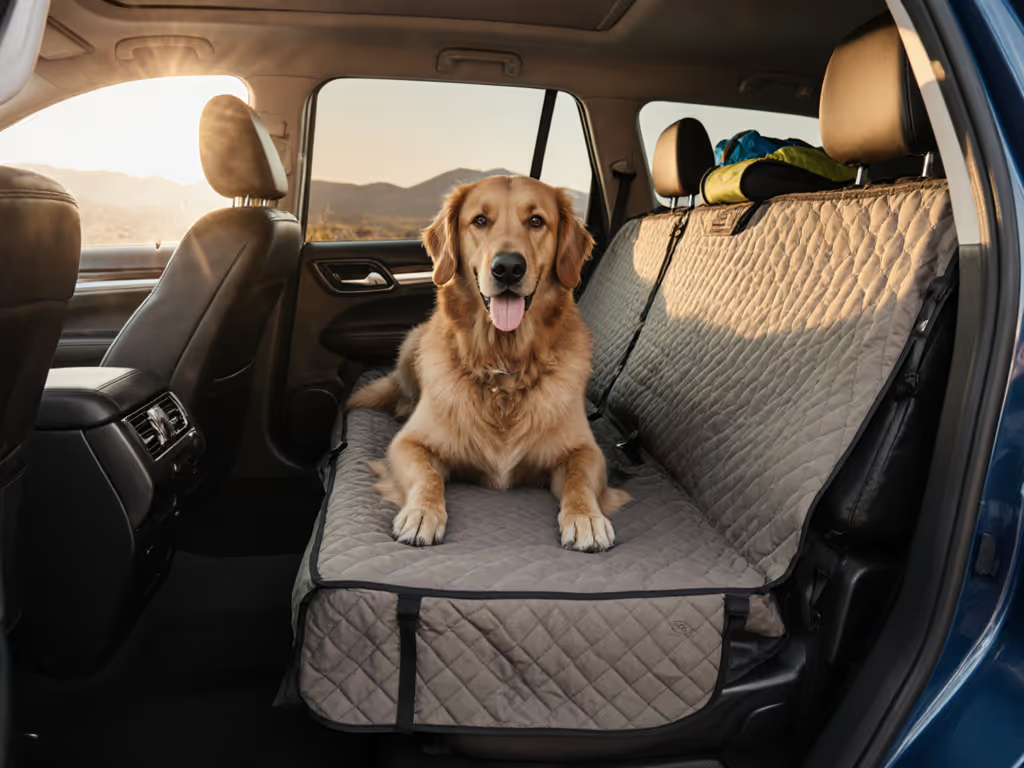
- Does the cover have a hammock design that prevents footwell collapse, or a sled-style base that stays put during braking?
- Are attachment rings and clips engineered to reduce rattle, or are they thin and loose?
Ruff Liners, for example, includes integrated door-panel covers, extending protection beyond just the seat, a thoughtful design choice that reduces scratches and paw prints on sills and panels. That's intelligent product architecture.
What's the real ROI on upgrading from a basic cover to a higher-end one?
It depends on your use case:
If you're doing weekly short trips (grocery runs, vet, daycare): A mid-range cover ($50-$100) with secure anchors and decent waterproofing is usually enough. Just confirm fit to your vehicle model first.
If you're doing road trips or multi-dog logistics: A premium cover ($150-$300) with reinforced stitching, non-slip backing, and comprehensive anchor support pays for itself by preventing sliding, extending upholstery life, and reducing dog anxiety. The noise audit (how much vibration and rattle transfer to your dog) becomes worth the investment.
If your dog is motion-sensitive or has behavioral anxiety: A well-designed cover (often mid-to-premium range) that keeps the dog stable and prevents sliding often reduces or eliminates car-sickness and pacing. That's worth $150-$200 alone.
Most consumers see ROI by year two: the cover protects seat fabric, door panels, and sills from damage, which would otherwise cost $500-$1,500 to repair. Plus, a calm dog is a safer car companion for everyone.
What features actually reduce noise and motion stress?
Listen for these specifics:
- Non-slip backing: Reduces sliding and the unpredictability that triggers anxiety. Ruffwear's recycled-polyester-with-non-slip-backing design is engineered for this.
- Hammock vs. sled design: A hammock (fabric extending from front seats to back seats) prevents dogs from falling into the footwell and creates a unified, stable surface. A flat, anchored sled (rigid base) offers similar security but different aesthetics.
- Cushioning or padding: Reduces vibration transfer. Kurgo and similar brands now build in subtle padding layers.
- Ventilation features: Mesh panels or strategic openings prevent hot spots and improve air circulation, especially in cargo rides. A dog that's not overheating is a dog that's not panting or pacing.
- Anchor-ring quality: Loose, thin rings rattle. Heavy, friction-fit rings stay silent. Most high-end covers use the latter.
Noise audit: Before purchasing, check reviews for rattle complaints or listen to installation videos. If clips clink loosely when anchored, that's a red flag.
Do I need a separate harness, crate, or barrier if I have a cover?
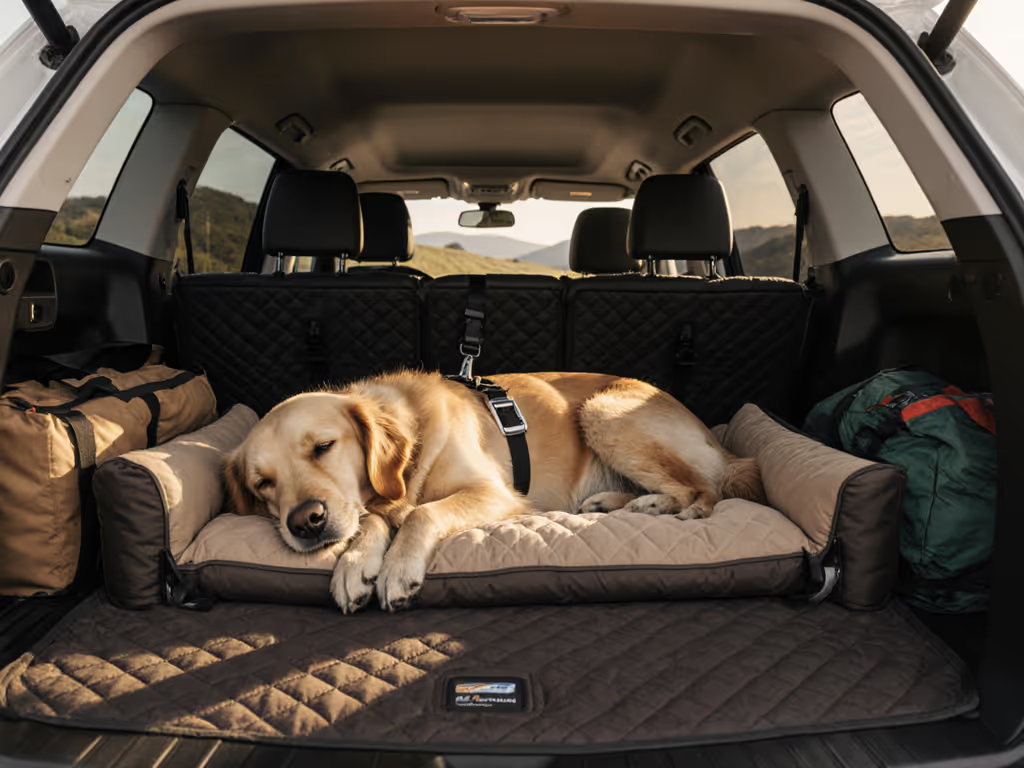
Not always, but it depends on your dog's size, temperament, and your local laws. A cover prevents your dog from damaging the upholstery and keeps them from sliding into footwells. A car seat cover alone doesn't legally restrain the dog in a crash. For true crash protection, you'd want a crash-tested harness or carrier in addition to the cover. Some modern systems integrate: a hammock cover with a tether-attachment loop lets you add a safety harness without extra clutter.
For anxiety-prone dogs, a crate inside a cover (if space allows) provides containment and predictability. For calm, trained dogs on short commutes, a well-anchored cover alone is often sufficient, though always check your state or province's pet-restraint laws.
The Real "Smart" Feature: Evidence-Based Fit
The future of dog car covers isn't sensors or apps: it's transparency. The smartest move manufacturers are making is offering fitfinders: tools where you input your car's year, make, model, and trim, and receive exact dimensions and SKU recommendations. ShearComfort and Covercraft now offer custom-fit options alongside universal alternatives, with fit guarantees. That removes guesswork and returns.
Until smart-tech integration proves durable and affordable, and until crash-safety certifications exist for connected components, your best strategy is to choose a cover based on:
- Verified fit to your vehicle
- Material and anchor quality (anti-rattle, non-slip, waterproof)
- User reviews from your specific car model (not generic five-star ratings)
- Return policy in case of mismatch
- Behavior-aware design (does it reduce sliding and noise?)
Where to Explore Further
Before buying, spend 20 minutes watching real installation videos for your car model. Our installation guide covers anchor types, common mistakes, and safety checks. Read reviews that mention your specific dog size and anxiety level. Compare the top-rated options, Meadowlark (affordable and accessible), Ruffwear (durability-focused), Kurgo (modular attachments), and brand-specific solutions for your vehicle, side by side using their dimension specs and anchor diagrams.
If your dog is motion-sensitive, prioritize covers with testimonials mentioning reduced pacing or car-sickness, not just "waterproof" claims. Ask sellers if they've tested the cover on your exact car model; responsive support here is itself a smart feature.
Finally, give yourself permission to return or exchange a cover that doesn't fit or rattle. The market is shifting toward accountability, and you shouldn't settle for a "good enough" solution when a secure, quiet ride is within reach. Comfort and predictability: those are the multipliers that make every other safety choice stick.
Related Articles