
7 Luxury Sedan Dog Accessories That Integrate Seamlessly
By Hana Saito • 10th May
Why Luxury Sedan Dog Car Accessories Matter
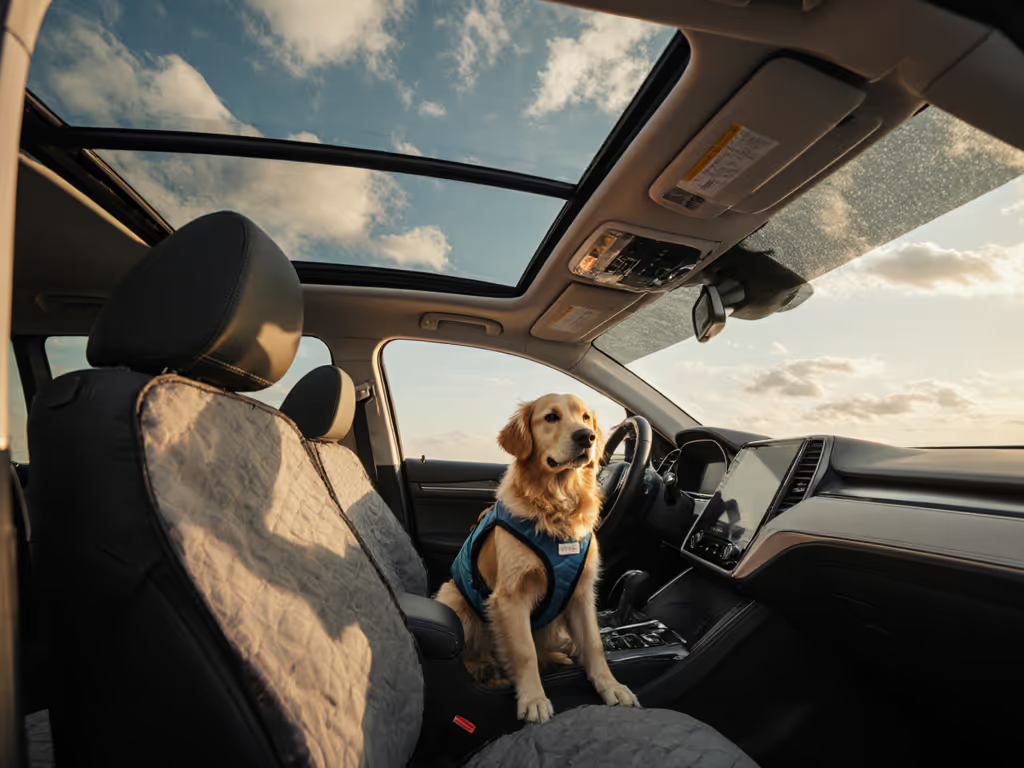
Driving a luxury sedan with a dog in your life presents a distinct challenge: maintaining both the safety of your companion and the integrity of a precision interior. Premium car pet travel solutions have evolved far beyond generic universal-fit covers and hastily designed barriers. Today's best accessories for luxury sedans are engineered around specific seat geometry, anchor points, and hatch dimensions, designed to integrate so cleanly that the car feels like it was built with the dog in mind from the factory.
The difference between a "fits most" solution and a genuine integration is measurable. A calm cabin is a safety feature, not a luxury. When your dog is secure, stable, and free from the stress of sliding gear or rattling hardware, focus returns to the road. Over the years, I've watched owners of Mercedes-Benz pet accessories, BMW dog travel gear, and Audi pet travel solutions discover that luxury car pet interior compatibility isn't about matching leather trim, it is about anchor precision, fail-safe design, and material choices that survive mud, hair, and years of use without compromising resale value.
The 7 Luxury Sedan Dog Accessories That Integrate Seamlessly
1. Model-Specific Seat-Back Barriers with Integrated Headrest Mounting
A true seat-back barrier for a luxury sedan doesn't sag, doesn't leave gaps at the headrest, and doesn't block the rear window. The highest-performing versions anchor directly to the headrest mounting points and secure to the seat frame using the existing ISOFIX anchor pockets. This approach eliminates the bounce and rattle that plague universal designs.
Look for barriers that measure the exact distance between your sedan's headrest posts (typically 24-28 inches in luxury models) and feature a taut mesh or rigid panel that won't cup or warp over time. Premium versions use automotive-grade polycarbonate or steel framing with marine-grade mesh that survives claw puncture and machine washing. Critically, they must not interfere with rear airbags or seat-occupancy sensors (a detail often glossed over in generic reviews). See our airbag-compatible restraint guide for how pet gear should interact with modern vehicle safety systems.
Installation time: 8-12 minutes. Maintenance: Wipe frame with a damp cloth; mesh is usually removable and machine washable at low temperature.
2. Premium Integrated Dog Crates That Honor Cargo Geometry
Cargo crates for sedans are often designed as afterthoughts, boxes that technically fit width-wise but collide with hatch slope or sit too high to close cleanly. Luxury sedan models with a curved cargo floor (a fact confirmed by a recent industry report on interior design trends across high-end European sedans) require crates engineered around that slope.
The best options are modular aluminum or composite crates that conform to the cargo footprint, secure via tie-down anchor points, and include a low-profile ventilation panel that doesn't obstruct the rear window. Premium builds use powder-coat finishes that resist salt spray and road debris, and doors use quiet-close hinges rather than loose latches that rattle during turns.
Model-specific sizing is non-negotiable. A crate rated for a sedan interior must accommodate the exact height between the hatch and the cargo floor beneath the rear seats, typically 18-22 inches depending on whether the rear seats are folded flat. Measure from the hatch to the cargo mat; don't rely on generic "fits most" dimensions.
Cleanup time: Open the top ventilation panel, hose out interior with warm water, towel dry, and leave the door cracked open to air. Most take under 5 minutes.
3. LATCH-Compatible Dog Harnesses with Padded Anchor Loops
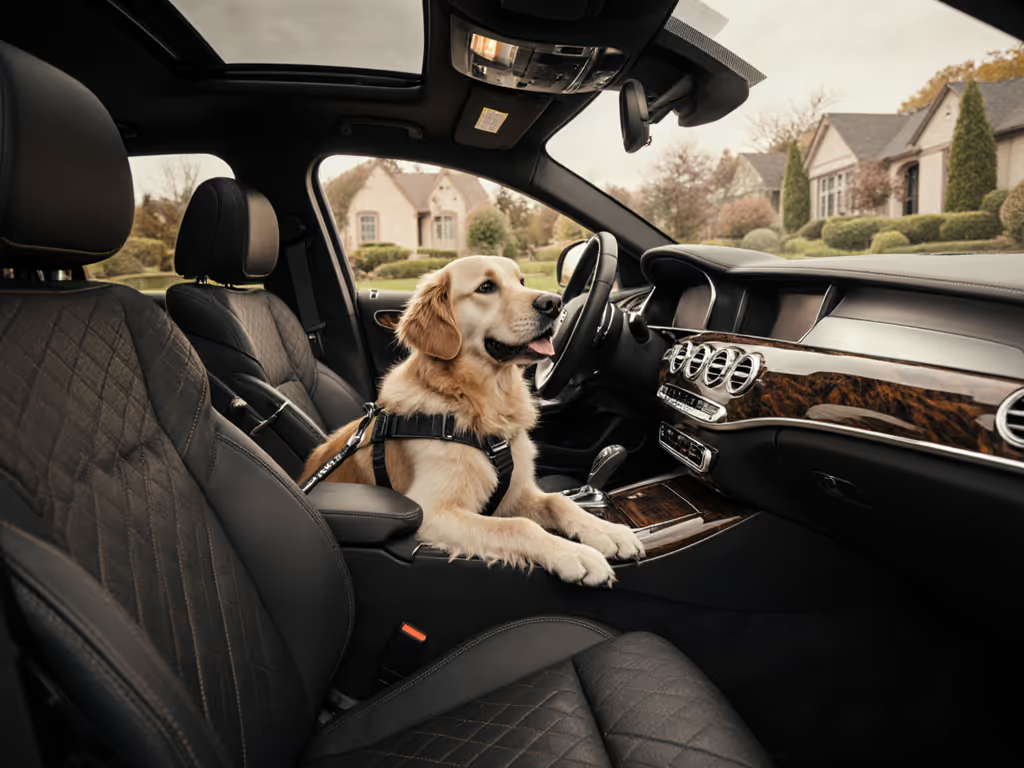
A harness rated for LATCH (Lower Anchors and Tethers for Children) compatibility is one of the few automotive dog products that has undergone some form of standardized testing. The harness should feature padded, reinforced anchor loops that attach directly to the lower LATCH points (usually two, positioned at the sedan's outer seat bases) or the ISOFIX belt, depending on your model.
Critical details: The anchor loop must be sized to fit the LATCH connector diameter without slipping or over-tensioning (typically 0.5-0.75 inches). The harness chest plate should distribute force across the rib cage during sudden deceleration, not concentrate it at the shoulders. Durable versions use 1.5-2 inch-wide webbing with ultrasonic-sealed edges to prevent fraying, and the connector points are bartacked or stitched with heavy-gauge thread.
Audio design matters, too. Premium harnesses use velcro or quiet-close buckles instead of jingling D-rings; a dog that can't hear metal moving is calmer.
Installation: Locate LATCH points under the rear seat cushion (owner's manual diagram is essential here), thread the anchor loops, and tighten the webbing to a firm tension, aiming for no more than a finger's width of slack. Test the fit by pulling the harness sideways; it should not shift more than 1 inch. Installation is 5-8 minutes once on your first fit.
4. Contoured Cargo Liners Engineered to Sedan Dimensions
Generic cargo liners sit in the footwell and bunch up at the hatch edge, leaving exposed upholstery around the wheel wells and below the rear armrest. Contoured liners for luxury sedans are molded to the exact shape of your cargo floor, including the dips around wheel wells and the precise slope of the hatch.
Material science is key. Get clarity on waterproof vs water-resistant performance when choosing liner materials. The best liners combine a waterproof TPE (thermoplastic elastomer) base layer with a non-slip top surface that won't let the dog or gear slide during acceleration or braking. They're typically 0.5-0.75 inches thick, dense enough to absorb impact but thin enough not to compromise hatch clearance.
Measurable benefits: A proper contoured liner covers 94-98% of the cargo floor, reduces water pooling in the footwells (critical if your dog gets wet), and can be wiped clean in under 3 minutes. Premium versions have a textured surface that resists mud caking and include a trim fit around backup-camera placements, so you are not covering the sensor.
Verify fit by checking the liner against three points: the floor slope angle at 45 degrees (typical for sedan hatches), clearance at wheel well lips (usually 1-2 inches of overlap), and hatch edge curvature. If the spec sheet doesn't mention these measurements, the liner is likely universal, not contoured.
5. Modular Tether and Anchor Integration Systems
Modular tether systems allow you to secure a dog in different positions depending on the trip: a short tether for commute days, a longer one for a dog that needs to lie down on a long drive, and a clip-based anchor that works with both LATCH points and cargo tie-down hardware.
The premium versions use aircraft-grade carabiners with visual load indicators, and the tether itself is woven with reflective thread for low-light visibility. Anchor points are designed to prevent tangling, they're positioned at least 12 inches apart and include quick-release mechanisms that don't require threading through seat frames.
A well-designed modular system is measurement-anchored to your exact sedan model. For example, a BMW dog travel gear setup should specify anchor heights and distances specific to BMW's ISOFIX pocket layouts. The same applies to Mercedes-Benz pet accessories and Audi pet travel solutions; each luxury marque has slightly different anchor geometry.
Scalability benefit: Add or remove tether segments based on your dog's size or the number of dogs traveling. This flexibility means a single system grows with your household, reducing the temptation to buy cheaper, less reliable one-off solutions later.
6. Quick-Release Seat Protectors That Preserve Resale Value
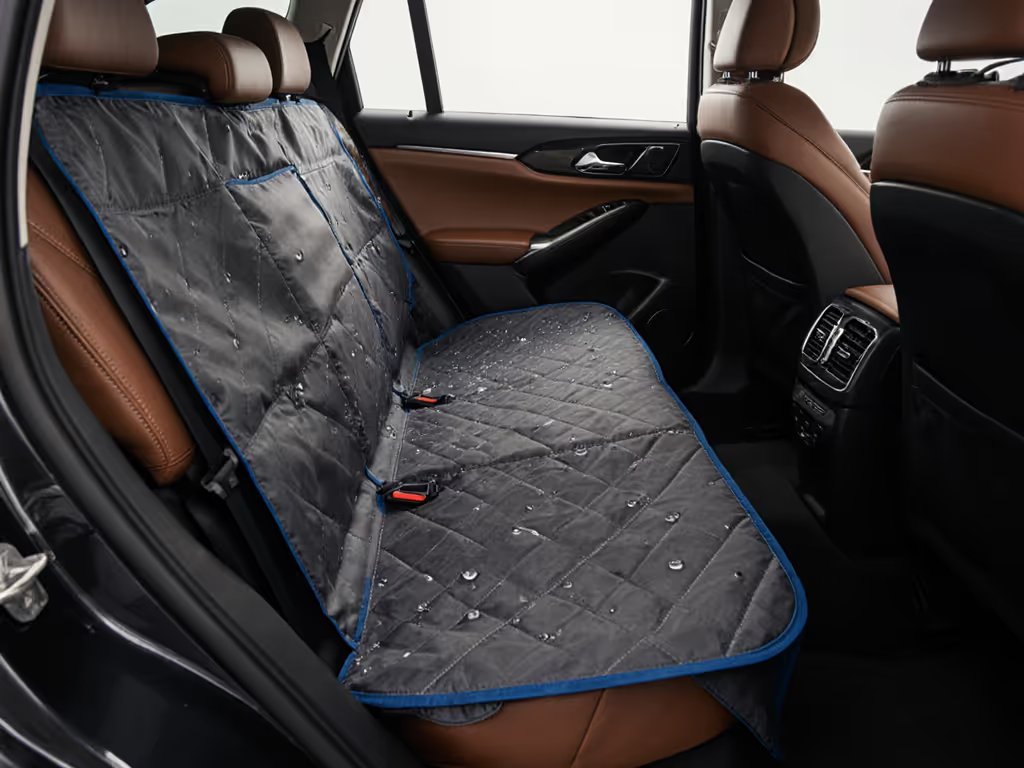
Leather in a luxury sedan is an investment, and every scratch, claw mark, and stain diminishes resale value. Premium seat protectors for sedans are engineered to attach without permanent alteration: they use anchor loops that thread under the seat cushion and through existing ISOFIX pockets, then secure via tensioners or magnetic clasps.
The material should be a dense, ballistic nylon or faux-suede composite that resists puncture and moisture. At least 1000D denier (a measure of fiber thickness) is a minimum; 1200D or higher is preferable. The underside should be a non-slip elastomer or felt that won't migrate across the seat during braking.
Cleanup time: Remove the protector in under 2 minutes (most use quick-release buckles), toss it in cold water with mild soap, and air dry. No special detergents needed; lukewarm water and a soft brush remove hair and light grime without damaging fibers.
A quality seat protector should cover the entire seating surface: bottom cushion, backrest, and headrest contact points. Explore premium seat covers with bespoke fit that preserve luxury interiors without compromising safety. Partial covers that leave the headrest exposed are a false economy; the headrest is often the first casualty of a dog's movement during turns.
7. Climate-Aware Ventilated Carriers for Extended Cargo Rides
When your dog rides in the cargo area during a multi-hour trip, temperature regulation becomes critical. Luxury sedan cargo areas are often insulated for sound dampening, which creates a thermal trap if airflow is poor.
Ventilated carriers engineered for sedans include panels designed around your car's existing climate vents. Some models use adjustable ducting that connects to the rear HVAC outlets (if your sedan has them), while others feature passive ventilation grilles positioned to work with the cabin air exchange when windows are cracked or climate control is active.
Key measurements: Your carrier should allow air to flow across at least 40% of its surface area. The ventilation grilles should be positioned at the top third and bottom third of the carrier (not just the top) to create convection even at parking-lot temperatures. Premium versions include a reflective or light-colored exterior that reduces solar heat gain.
For luxury car pet interior compatibility, verify that the carrier is rated for your exact sedan's cargo dimensions. Again, hatch slope and rear wheel well clearance are decisive factors. A carrier that fits a BMW sedan may not fit an Audi or Mercedes-Benz due to subtle differences in floor geometry and hatch profile.
Integration Best Practices for Luxury Sedans
Seamless integration isn't accidental. It follows a measurement-anchored methodology:
-
Document Your Exact Specifications: Measure your sedan's interior dimensions at three heights (bottom, mid-seat, top). Note the angle of the hatch slope, the distance between LATCH anchor points, and the width of wheel wells. A single inch of variance can mean the difference between a secure fit and a solution that slides or binds.
-
Prioritize Non-Permanent Anchoring: True luxury car pet interior compatibility avoids drilling, adhesive, or sensor interference. All fasteners should route through existing anchor points: LATCH, ISOFIX, cargo tie-downs, or seat-frame gaps that are designed for such use.
-
Test Stability Before Committing: Once installed, perform a stability check in an empty parking lot. Accelerate and brake gently; listen for rattles or movement. A secure setup should produce zero audible noise when the cabin is otherwise quiet.
-
Layer Protective Systems: Don't rely on a single protector. Combine a cargo liner with a seat protector and a barrier for comprehensive interior preservation. This redundancy is what protects resale value over years of active use.
Maintenance and Longevity
Premium, integrated dog accessories for luxury sedans are built to last 5-7 years or longer with minimal upkeep. The key to longevity is material choice and consistent, simple maintenance:
-
Waterproof and TPE components (liners, carrier panels) resist salt, sand, and UV without cracking. Wipe with a damp microfiber cloth; air dry to prevent mildew.
-
Mesh and fabric barriers machine wash in cold water on a gentle cycle. Skip fabric softener; it reduces grip and water repellency.
-
Velcro anchor loops and webbing tend to collect lint and lose grip over time. Lint-roll them monthly or run a soft brush in the direction of the loop pile to restore adhesion.
-
Metal hardware (carabiners, D-rings, hinges) benefits from a light wipe with a silicone-free cloth to prevent corrosion. No polishing agents needed.
Cleanup time: A full-cabin post-trip wipe-down (liner, barriers, seat protectors) takes 10-15 minutes and keeps everything feeling fresh while minimizing odor. For step-by-step care routines, see our dog car accessories maintenance guide.
Summary and Final Verdict
Luxury sedan dog car accessories have matured into precision products. The 7 accessories outlined here share one defining trait: they respect the engineering of the vehicle and the needs of the driver and dog alike. Premium car pet travel solutions are no longer one-size-fits-all; they are measurement-anchored, model-specific, and designed to integrate so cleanly that the cabin remains visually calm and acoustically silent, the hallmark of a thoughtful interior.
When a barrier doesn't rattle, a crate sits flush without shifting, and a harness distributes force safely across the dog's frame, the result is more than convenience. It is the elimination of mental load: you leave the car without rearranging gear or worrying about damage. Your dog is calm, secure, and settled. The cabin is preserved. Resale value is protected.
If your priority is durability, aesthetic integration, and measurement-backed fit, prioritize products that specify exact model-year compatibility and anchor-point documentation. Avoid anything labeled "universal" when your vehicle is a luxury sedan; precision always outperforms compromise. Research the specific product fit guides, read owner forums for your exact model (e.g., owners of Mercedes-Benz pet accessories or BMW dog travel gear), and confirm that installation requires no modification to sensors or structural elements.
The investment in the right accessories (chosen with the same care you'd apply to any high-value automotive upgrade) pays dividends across years of travel, road trips, vet visits, and daily commutes. A calm cabin is a safety feature, not a luxury. Build yours intentionally.
Related Articles